Interview
51 Projects, One Exit and a Gold Medal: A Conversation with Alan Frei
51 Projects, One Exit and a Gold Medal: A Conversation with Alan Frei
51 Projects, One Exit and a Gold Medal: A Conversation with Alan Frei
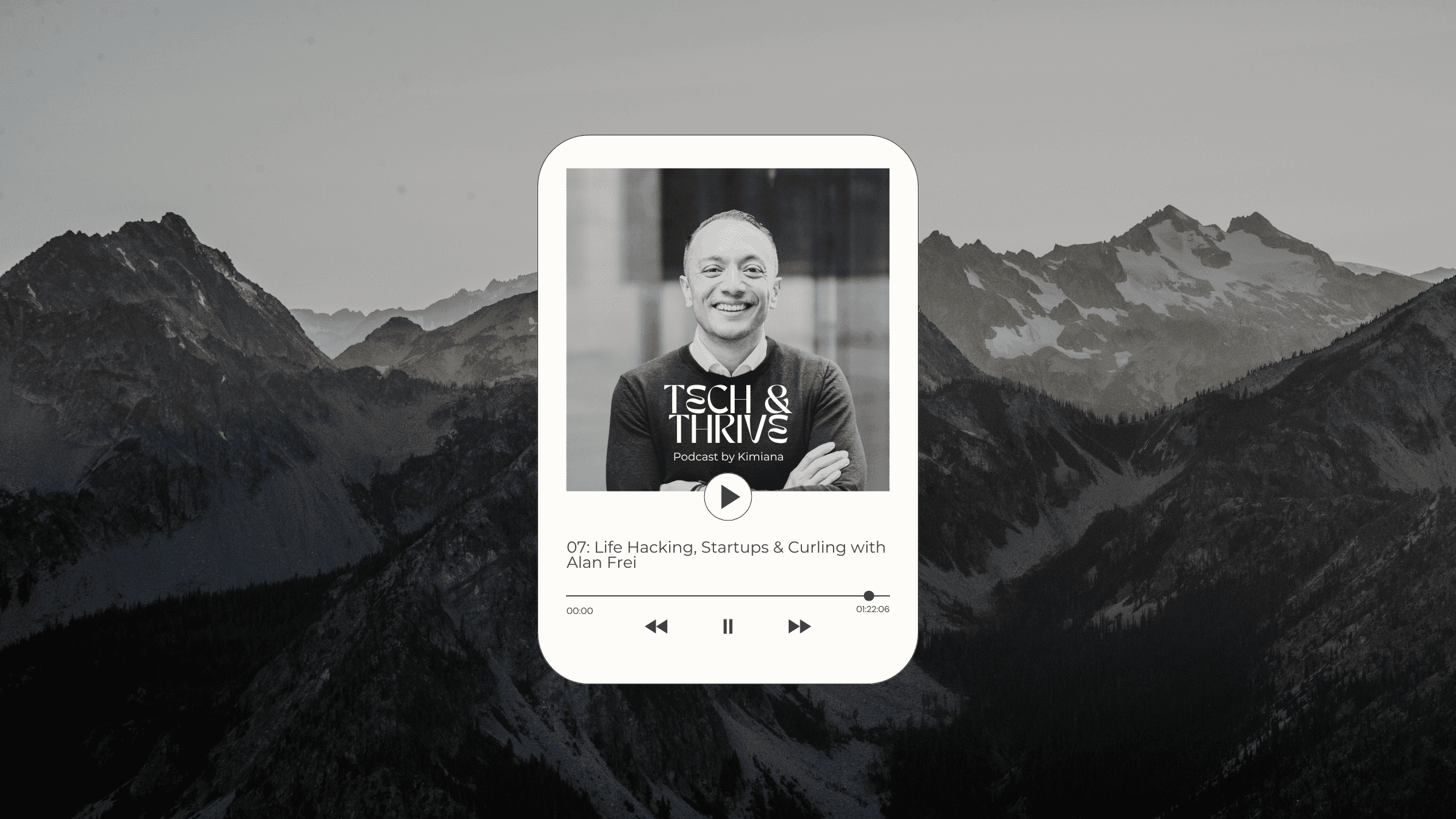
A conversation with entrepreneur and co-founder of Amorana Alan Frei on failure as a strategy, building through content and what it takes to turn an ambitious goal into a plan.
A conversation with entrepreneur and co-founder of Amorana Alan Frei on failure as a strategy, building through content and what it takes to turn an ambitious goal into a plan.
The long road to one good idea
Before co-founding Amorana, one of Switzerland's fastest growing e-commerce companies, Alan launched 51 projects. A tutoring platform. A taxi price transparency tool. Mango schnapps. None of them worked, and he talks about all of them with the same enthusiasm he brings to the things that did.
What changed with Amorana was not the idea. It was the commitment. After years of running multiple projects in parallel, Alan stopped everything else and focused on one thing. "Stopping all the projects and focusing on one thing, that was probably the most important lesson."
The business started with a landing page, a list of private email addresses and three customers who received expired massage oil in secondhand packaging. When Fifty Shades of Grey came out shortly after, the company sold out of handcuffs for three months and never looked back.
Building, scaling and the cost of bad hires
Scaling Amorana taught Alan most of what he knows about people. The company grew fast and hired faster, often cutting corners on vetting. The result was a series of painful lessons.
Looking back, the real mistake was a reluctance to pay for the best people. "In a startup, it's so important that you get really the best people." A few hundred francs saved on a salary costs far more in time, attention and eventual turnover. His reference point is a principle from Steve Wynn: in any industry, the company with the lowest staff turnover wins. From that point on, Alan became a strong believer in paying people properly, giving equity where possible and being radically transparent about compensation.
Life after the exit
Amorana was sold to the Lovehoney Group in 2020. The earn-out period that followed confirmed something Alan had suspected: he was not built for large organisations. He briefly tried investing in startups after leaving, discovered he was far too enthusiastic about every pitch and quickly moved on.
What came next was the Alan Frei Company, built around content, community and products. The model is straightforward: create content that documents a life worth following, build an audience around it and monetise through products and events. The curling journey, the life hacks, the health transformation and now poker all sit under one umbrella and serve the same purpose.
The formula he lives by
"I strongly believe that talent x time = success. And I just had less talent than the others, so I knew I need to have a little bit more time."
Not a reframe or a motivational arc. Just a clear-eyed assessment of his own starting point and a logical response to it. Stay in the game long enough and the compounding does the work.
Content, personal brand and the shift back to people
Alan sees content not as a marketing channel but as the business itself. His view is that the era of anonymous corporate brands is giving way to something older: companies built on the reputation of a person. Nestle, ABB, Bally. All started as people with names and reputations attached. Social media is bringing that back.
He runs his entire company from his phone, batches all calls to Tuesday afternoons and walks everywhere. The constraints are deliberate.
From obese to Asian Winter Games champion
After the exit, Alan was overweight, financially secure and without purpose. His doctor told him he was on a bad path. With his father and grandfather both having died at 59, he decided to change course.
His method was direct: identify the fittest people in the world and become one of them. That logic led him to the Olympics, through a lawyer, a cross country skiing coach, a Filipino heritage and eventually a WhatsApp group of Swiss Filipino curlers looking for a fourth.
The team did not qualify for Milano Cortina 2026, falling at the final qualification event in Kelowna. But along the way they won gold at the 2025 Asian Winter Games in Harbin, China, the first ever Asian Winter Games gold medal for the Philippines.
"The difference between a goal and a dream is the plan."
Where to follow Alan
You can follow Alan Frei and his current work at alanfrei.com, where he shares insights on entrepreneurship, content and the ongoing experiments that make up the Alan Frei Company.
The long road to one good idea
Before co-founding Amorana, one of Switzerland's fastest growing e-commerce companies, Alan launched 51 projects. A tutoring platform. A taxi price transparency tool. Mango schnapps. None of them worked, and he talks about all of them with the same enthusiasm he brings to the things that did.
What changed with Amorana was not the idea. It was the commitment. After years of running multiple projects in parallel, Alan stopped everything else and focused on one thing. "Stopping all the projects and focusing on one thing, that was probably the most important lesson."
The business started with a landing page, a list of private email addresses and three customers who received expired massage oil in secondhand packaging. When Fifty Shades of Grey came out shortly after, the company sold out of handcuffs for three months and never looked back.
Building, scaling and the cost of bad hires
Scaling Amorana taught Alan most of what he knows about people. The company grew fast and hired faster, often cutting corners on vetting. The result was a series of painful lessons.
Looking back, the real mistake was a reluctance to pay for the best people. "In a startup, it's so important that you get really the best people." A few hundred francs saved on a salary costs far more in time, attention and eventual turnover. His reference point is a principle from Steve Wynn: in any industry, the company with the lowest staff turnover wins. From that point on, Alan became a strong believer in paying people properly, giving equity where possible and being radically transparent about compensation.
Life after the exit
Amorana was sold to the Lovehoney Group in 2020. The earn-out period that followed confirmed something Alan had suspected: he was not built for large organisations. He briefly tried investing in startups after leaving, discovered he was far too enthusiastic about every pitch and quickly moved on.
What came next was the Alan Frei Company, built around content, community and products. The model is straightforward: create content that documents a life worth following, build an audience around it and monetise through products and events. The curling journey, the life hacks, the health transformation and now poker all sit under one umbrella and serve the same purpose.
The formula he lives by
"I strongly believe that talent x time = success. And I just had less talent than the others, so I knew I need to have a little bit more time."
Not a reframe or a motivational arc. Just a clear-eyed assessment of his own starting point and a logical response to it. Stay in the game long enough and the compounding does the work.
Content, personal brand and the shift back to people
Alan sees content not as a marketing channel but as the business itself. His view is that the era of anonymous corporate brands is giving way to something older: companies built on the reputation of a person. Nestle, ABB, Bally. All started as people with names and reputations attached. Social media is bringing that back.
He runs his entire company from his phone, batches all calls to Tuesday afternoons and walks everywhere. The constraints are deliberate.
From obese to Asian Winter Games champion
After the exit, Alan was overweight, financially secure and without purpose. His doctor told him he was on a bad path. With his father and grandfather both having died at 59, he decided to change course.
His method was direct: identify the fittest people in the world and become one of them. That logic led him to the Olympics, through a lawyer, a cross country skiing coach, a Filipino heritage and eventually a WhatsApp group of Swiss Filipino curlers looking for a fourth.
The team did not qualify for Milano Cortina 2026, falling at the final qualification event in Kelowna. But along the way they won gold at the 2025 Asian Winter Games in Harbin, China, the first ever Asian Winter Games gold medal for the Philippines.
"The difference between a goal and a dream is the plan."
Where to follow Alan
You can follow Alan Frei and his current work at alanfrei.com, where he shares insights on entrepreneurship, content and the ongoing experiments that make up the Alan Frei Company.
The long road to one good idea
Before co-founding Amorana, one of Switzerland's fastest growing e-commerce companies, Alan launched 51 projects. A tutoring platform. A taxi price transparency tool. Mango schnapps. None of them worked, and he talks about all of them with the same enthusiasm he brings to the things that did.
What changed with Amorana was not the idea. It was the commitment. After years of running multiple projects in parallel, Alan stopped everything else and focused on one thing. "Stopping all the projects and focusing on one thing, that was probably the most important lesson."
The business started with a landing page, a list of private email addresses and three customers who received expired massage oil in secondhand packaging. When Fifty Shades of Grey came out shortly after, the company sold out of handcuffs for three months and never looked back.
Building, scaling and the cost of bad hires
Scaling Amorana taught Alan most of what he knows about people. The company grew fast and hired faster, often cutting corners on vetting. The result was a series of painful lessons.
Looking back, the real mistake was a reluctance to pay for the best people. "In a startup, it's so important that you get really the best people." A few hundred francs saved on a salary costs far more in time, attention and eventual turnover. His reference point is a principle from Steve Wynn: in any industry, the company with the lowest staff turnover wins. From that point on, Alan became a strong believer in paying people properly, giving equity where possible and being radically transparent about compensation.
Life after the exit
Amorana was sold to the Lovehoney Group in 2020. The earn-out period that followed confirmed something Alan had suspected: he was not built for large organisations. He briefly tried investing in startups after leaving, discovered he was far too enthusiastic about every pitch and quickly moved on.
What came next was the Alan Frei Company, built around content, community and products. The model is straightforward: create content that documents a life worth following, build an audience around it and monetise through products and events. The curling journey, the life hacks, the health transformation and now poker all sit under one umbrella and serve the same purpose.
The formula he lives by
"I strongly believe that talent x time = success. And I just had less talent than the others, so I knew I need to have a little bit more time."
Not a reframe or a motivational arc. Just a clear-eyed assessment of his own starting point and a logical response to it. Stay in the game long enough and the compounding does the work.
Content, personal brand and the shift back to people
Alan sees content not as a marketing channel but as the business itself. His view is that the era of anonymous corporate brands is giving way to something older: companies built on the reputation of a person. Nestle, ABB, Bally. All started as people with names and reputations attached. Social media is bringing that back.
He runs his entire company from his phone, batches all calls to Tuesday afternoons and walks everywhere. The constraints are deliberate.
From obese to Asian Winter Games champion
After the exit, Alan was overweight, financially secure and without purpose. His doctor told him he was on a bad path. With his father and grandfather both having died at 59, he decided to change course.
His method was direct: identify the fittest people in the world and become one of them. That logic led him to the Olympics, through a lawyer, a cross country skiing coach, a Filipino heritage and eventually a WhatsApp group of Swiss Filipino curlers looking for a fourth.
The team did not qualify for Milano Cortina 2026, falling at the final qualification event in Kelowna. But along the way they won gold at the 2025 Asian Winter Games in Harbin, China, the first ever Asian Winter Games gold medal for the Philippines.
"The difference between a goal and a dream is the plan."
Where to follow Alan
You can follow Alan Frei and his current work at alanfrei.com, where he shares insights on entrepreneurship, content and the ongoing experiments that make up the Alan Frei Company.
Whereveryouareinyourtechnologyjourney,ashortconversationcanclarifythenextstep.
Whereveryouareinyourtechnologyjourney,ashortconversationcanclarifythenextstep.

Whereveryouareinyourtechnologyjourney,ashortconversationcanclarifythenextstep.